

Blog
What is a Traditional Fijian Lovo?
One of the amazing experiences that hold a special place in the hearts’ of our guests is our Fijian lovo, a banquet cooked using an earth oven
Here at the Jean-Michel Cousteau Resort, we pride ourselves on offering not only luxurious, relaxing accommodation and facilities, but also a taste of the incredible heritage and traditions of the local Fijian culture. One of the amazing experiences that hold a special place in the hearts of our guests is our Fijian lovo, a banquet cooked using an earth oven.
Find out a little more about this tasty meal and how you can join in on the excitement during your romantic Fiji getaway or family holiday.
Fijian Flavours
Fiji food and Fijian cuisine are centered on fresh, locally sourced ingredients, including seafood, coconut milk, and starchy root vegetables. Fijian cuisine has long consisted of primarily foraged and farm-grown food, with coconut used in various forms such as coconut milk, oil, and grated flesh. Root vegetables like taro and cassava are staples, with cassava now replacing yams as the most cultivated and consumed crop in Fiji.
The country's recent British colonial history has also influenced its cuisine. Meats like chicken and lamb are common, while cattle and pork are typically reserved for special occasions.
Seafood is a major protein source, and many children enjoy fishing for meals. Primary flavorings include coconut milk, sea water, Indian spices, onions, carrots, garlic, ginger, limes, lemons, curry leaves, and chili. Foraged items such as forest ferns (ota) and wild herbs (bele) are also important in a traditional Fijian diet.
What is a Traditional Fijian lovo?
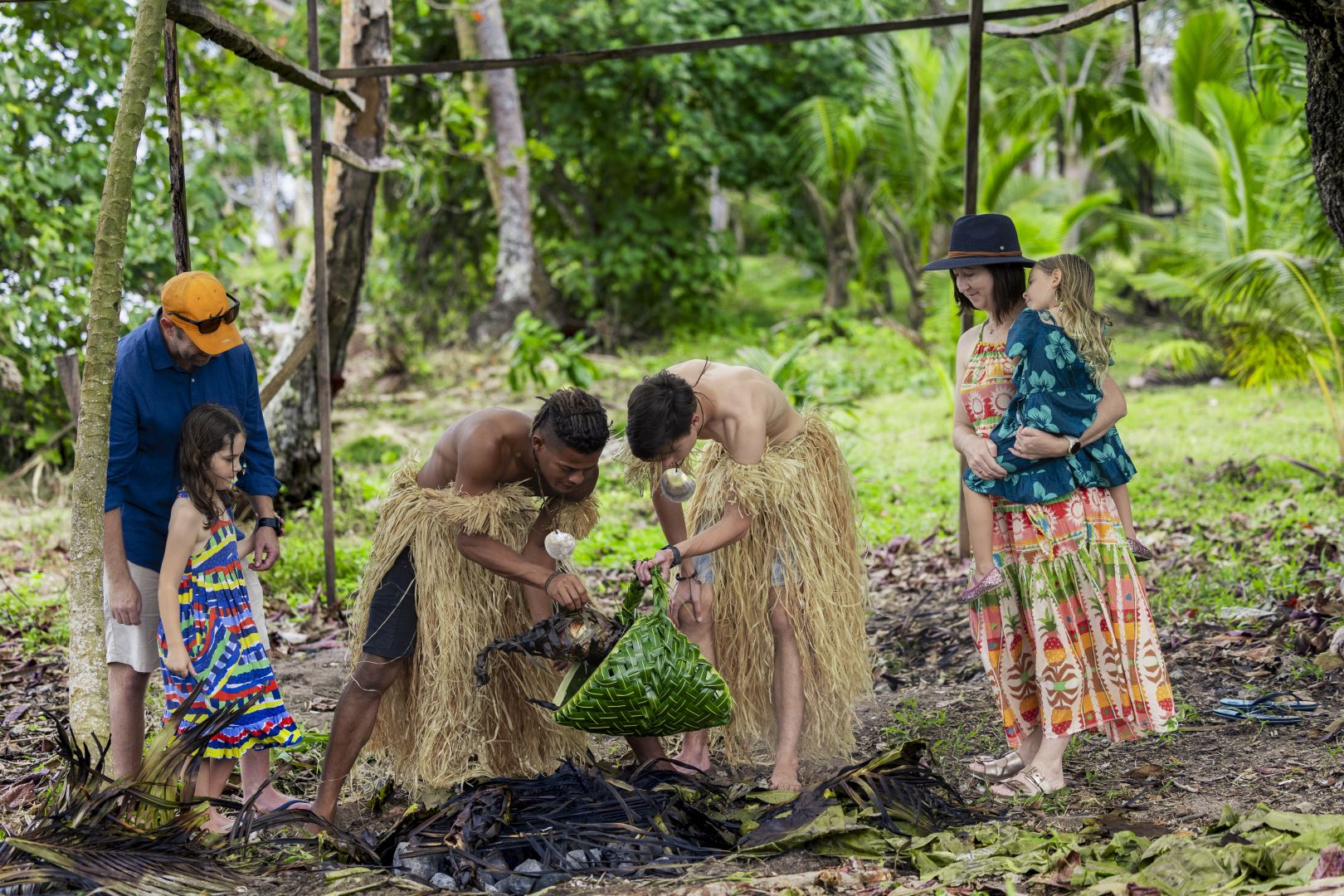
The term ‘lovo’ also refers to the underground oven that is used to cook a traditional Fijian feast.
This traditional cooking technique involves digging a shallow pit and heating hot stones inside. Common ingredients for lovo include chicken, pork, fish, taro, cassava (a root vegetable often boiled or used in desserts), and vegetables. Meats and vegetables are marinated in coconut cream and spices to prepare them for cooking. The food is then wrapped in banana and palm leaves before being placed on the hot stones. Some foods, like seafood, may be grilled or steamed in the lovo, while side dishes such as rourou (boiled taro leaves) are often served alongside the main courses.
Once the food is inside, the lovo pit is covered in banana leaves, soil, or potato sacks and left to slow cook for several hours. Traditionally, women prepare the food while men prepare the lovo pit.
After cooking, the food emerges smoky, tender, and juicy, meant to be shared among many people as a communal feast.
The lovo cooking method is similar to the Māori hāngī in New Zealand and the umu in Samoa. The lovo is often reserved for special occasions in Fijian villages such as weddings, births, and funerals, and is a core part of the local culinary arts.
Lovo Etiquette and Customs
Attending a traditional Fijian lovo feast isn't just a chance to try delicious food, it’s an opportunity to immerse yourself in the heart of Fijian culture and hospitality. The customs and etiquette surrounding a lovo feast are deeply rooted in tradition, making the experience both meaningful and memorable.
Upon arrival at a lovo feast, guests are often welcomed with a ceremonial kava drinking ritual. Kava, a traditional Fijian drink made from the roots of the kava plant, is shared among everyone present. This ceremony is a symbol of unity and respect, setting the tone for the evening and inviting guests to relax and connect with their hosts.
As the lovo feast begins, you’ll find a rich spread of traditional Fijian dishes served buffet style. The menu often features specialties like palusami - taro leaves stuffed with corned beef, onions, and rich coconut cream - alongside fish suruwa, a flavorful curry made with fish, coconut milk, and aromatic spices. Don’t miss the chance to sample raw fish marinated in lime juice and coconut milk, a refreshing staple of local cuisine, or the stewed spinach crafted from taro leaves and creamy coconut milk. Each dish is a celebration of Fijian ingredients, from root crops like taro to fresh seafood and tropical coconut.
When it’s time to eat, it’s customary in Fijian culture to use your hands, embracing the traditional way of enjoying food. However, utensils are also provided for those who prefer them. Sharing food in this way is a sign of togetherness, and guests are encouraged to try a little bit of everything, savoring the unique flavors of the traditional Fijian lovo.
Throughout the meal, the atmosphere is lively and welcoming. After dining, guests are often treated to traditional Fijian music and dance performances, such as the Meke, a captivating dance that brings Fijian legends and stories to life.
As the evening draws to a close, it’s customary to thank your hosts for their hospitality and the wonderful meal. Bringing a small gift, like fresh fruit or a bottle of wine, is a thoughtful gesture that shows your appreciation. Remember to dress modestly, remove your shoes before entering the dining area, and wait for the elders to begin eating before you start. By respecting these traditions (trying every dish, participating in the kava ceremony, and embracing the communal spirit) you’ll ensure an authentic lovo feast experience.
Participating in a Fijian lovo is an enjoyable way to honour the customs, share in the joy of community, and experience the heart of Fijian culture firsthand.
Experience a lovo feast at Jean-Michel Cousteau Resort
We bring the traditional Fijian lovo to the heart of the resort, located among the beautiful Fiji islands of the South Pacific, giving our guests the chance to experience this special style of cooking every week. The diversity of traditional Fijian food across the islands is reflected in our offerings.
Using recipes handed down through generations, our Executive Chef, Raymond Lee, prepares a veritable Fijian feast. The buffet features a variety of Fijian dishes, and may include:
Kokodaraw
Fish marinated in lime and lemon juice, served in a coconut shell. Kokodaraw is considered the national food of Fiji.
Palusami
Taro leaves stuffed with corned beef, onions, and coconut cream, a staple at lovo feasts.
Rourou
Taro leaves cooked in coconut milk, is often served as a side dish.
Fish-in-lolo
Fish steamed in taro leaves with onions, garlic, chili, coconut milk, and a touch of salt, is another highlight.
Cassava Pudding
A traditional dessert made from grated cassava, coconut milk, sugar, and butter. Often wrapped in banana leaves and steamed or baked, it offers a sweet finish with enhanced flavor and texture.
Rice is commonly served alongside curries, and Indo-Fijian dishes may include garam masala as a key spice. Unique local ingredients such as nama (sea grapes) and duruka (Fijian asparagus) are also featured. Lemon juice is used as a flavor enhancer for seafood and salads, and some dishes are grilled or cooked over an open fire, reflecting traditional methods.
As you dig in, you’ll also be treated to the vocal stylings of a traditional Fijian guitar group, the Band Boys, whose lilting melodies are the perfect soundtrack for a truly wonderful meal.
If you want to go on a tropical vacation there's no shortage of destinations to choose from, but if you want to combine the beauty of an island holiday with a warm-hearted culture and experiences you won’t find anywhere else, this is the only place to put on your map.
Explore the authentic Fiji experiences available at Jean-Michel Cousteau Resort in Savusavu, and start planning your dream getaway today.