
Blog
What is a Traditional Kava Ceremony in Fiji?
Fiji is a country brimming with fascinating history, ancient traditions and a welcoming culture that we’re endlessly proud to embody here at the Jean-Michel Cousteau Resort.
A traditional Fijian kava ceremony is just one of the time-honoured practices held at our five star luxury resort in Savusavu. Sharing kava is ritual practiced in villages all over Fiji and is an integral part of Fijian culture, symbolising unity, respect, and community bonding. But just what can you expect from this unique experience?
What is Kava?
Kava is a traditional, non-alcoholic Fijian drink made from the ground root of the piper mythisticum - a type of black pepper plant grown in the Pacific Islands. It contains a number of natural active chemicals known as kava lactones. These have been found to produce a number of effects such as muscle relaxation, a feeling of calm, medicinal qualities and a slight numbing sensation, all of which are safe if consumed in moderation.
The preparation for a kava ceremony is a ritual in itself, beginning with the careful harvest of the kava root. Once collected, the root is sun dried, ground into a fine powder, then mixed with water and strained to create the signature kava drink ready for special events and ceremonial occasions. Kava is traditionally served in bowls made from half a coconut, with each participant receiving their share according to their rank.
Kava plants are large, growing up to 2.5 metres tall! Kava is available as various products, including powdered kava and other forms, and is also traded and consumed overseas.
What Does Kava Taste Like?
Kava has an earthy flavour, described as tasting like bitter, peppery, muddy water, which may not be typically delicious to man
people. After drinking kava, you might feel a slight numbing sensation on your tongue and mouth, this is a normal effect and does not impair mental clarity.
What Happens in a Traditional Kava Ceremony?
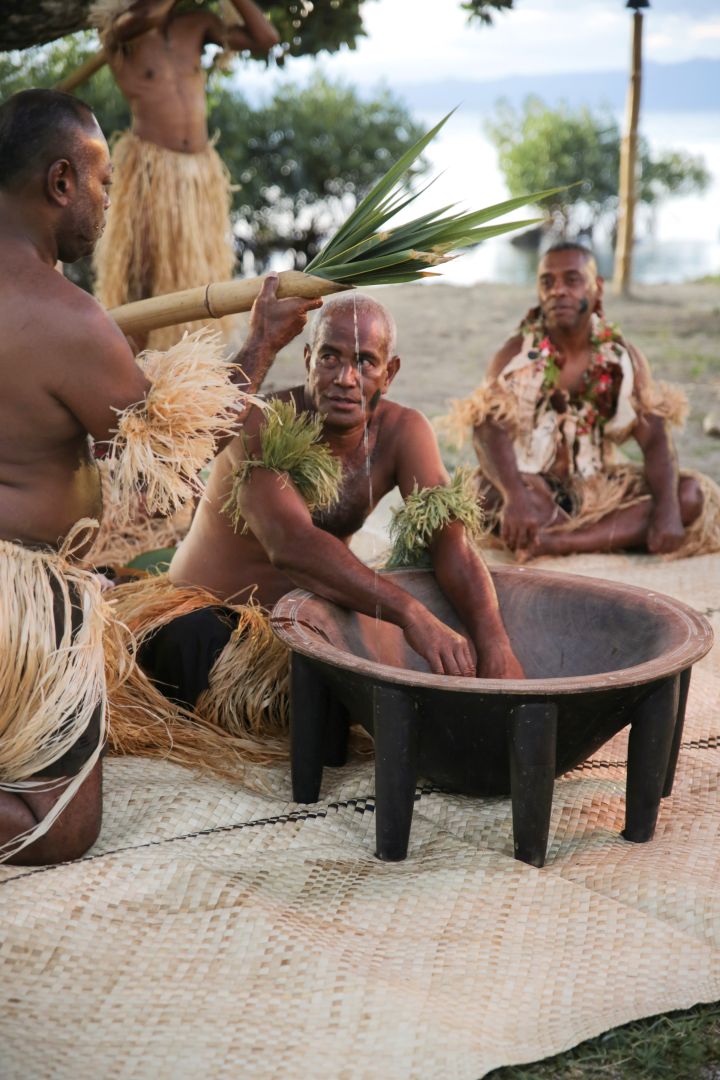
Kava is often shared as part of a ceremonial event at local Fijian villages. The ceremony usually occurs in the evening, in a communal setting where participants sit in a semi-circle around the village chief. The purpose of the ceremony is to foster unity and social interaction. If you’re lucky enough to join, there are a few rules you must adhere to; Before entering a village, visitors must first gain formal permission from the chief.
This traditional protocol is otherwise known as sevusevu and involves the presentation of kava to the village chief on arrival.
When joining our complimentary excursion to the local Fijian village of Nukubalavu, the sevusevu is done on your behalf. If you do meet the chief during this visit, it’s important to stay below his eye level to avoid causing disrespect. Always bow, introduce yourself and back away without turning away.
When accepting this traditional Fijian drink, it's customary to wait your turn to be served. The host will offer each of you a choice: a half cup ("low tide") for those new to kava, or a full cup (known as “high tide”) for the more adventurous. When receiving your kava, clap once with cupped hands, say 'Bula!', take the cup, and drink it all in one go! Once you've finished, return the cup to the person who gave it to you and clap loudly three times to show appreciation. It's disrespectful to show distaste for flavour after drinking kava, so keep a neutral expression even if you don't like the taste.
You may feel a slight numbing sensation on your tongue and mouth, but kava is considered very safe to drink in small quantities. However, if you are on any type of medication or are unwell, we suggest politely declining this drink. If this is the case, extend both hands outwards with your thumbs overlapping and say ‘vinaka’, which means 'no thank you' in Fijian.
The ceremony often includes periods of rest between rounds, allowing for reflection, prayer, or social interaction. Kava ceremonies often transition into talanoa, a cultural practice of open storytelling and dialogue that strengthens relationships. Sharing kava with friends fosters camaraderie and unity.
Kava is consumed in Fiji at all times of day, in both public and private settings, and is used to honor guests, seal agreements, and mark milestones. Kava ceremonies play a significant role in various celebrations, including weddings and funerals, and can be used to settle disagreements or make peace between villages. Visitors join kava ceremonies to experience authentic Fijian culture, which can include music, informal storytelling, and celebrations.
Kava Ceremony Etiquette
Observing proper kava ceremony etiquette is key to ensuring a respectful and memorable experience for everyone involved. When attending a kava ceremony, dress modestly by covering your shoulders and knees, and ensure hats and sunglasses are removed before entering the ceremony space. Both men and women participate in kava ceremonies, reflecting its inclusive cultural significance. Participants should sit cross-legged on woven mats during the ceremony, and it is considered disrespectful to point your feet or legs at others or walk in front of the tanoa (a traditional wooden bowl used in the preparation of kava).
Photography during kava ceremonies is generally permitted, but it's best to ask for permission first.
We encourage you to learn more about the kava ceremony and its significance to deepen your experience in Fiji.
Why Should I Experience a Kava Ceremony?
Participating in a kava ceremony is a truly unique experience, allowing visitors to immerse themselves in the warmth and hospitality of Fijian culture. By the end of the evening, guests leave with a renewed sense of togetherness and appreciation for the traditions that make Fiji’s kava ceremony such a cherished cultural event.
Where Can I Experience a Kava Ceremony in Fiji?
While staying at Jean-Michel Cousteau Resort you can take part in a traditional kava ceremony most evenings, or when joining our complimentary excursion to the local village of Nukubalavu.
We’re extremely proud of our heritage and work to practice various traditional Fijian traditions wherever possible. You can experience a cultural lovo feast, take part in a Fijian story-telling session and of course, experience an unforgettable kava ceremony.
Explore more of the exciting experiences available at Jean-Michel Cousteau Resort, and start planning your Fijian adventure today.